
Notes from a case study and a change management reflection with Albert.
Many organizations today are not lacking data. Assessments have been conducted, mapping is available, insights are already in hand. Yet change still feels heavy—often even stalled.
Not because the data is wrong, but because the organization is not ready to truly use that data to change.
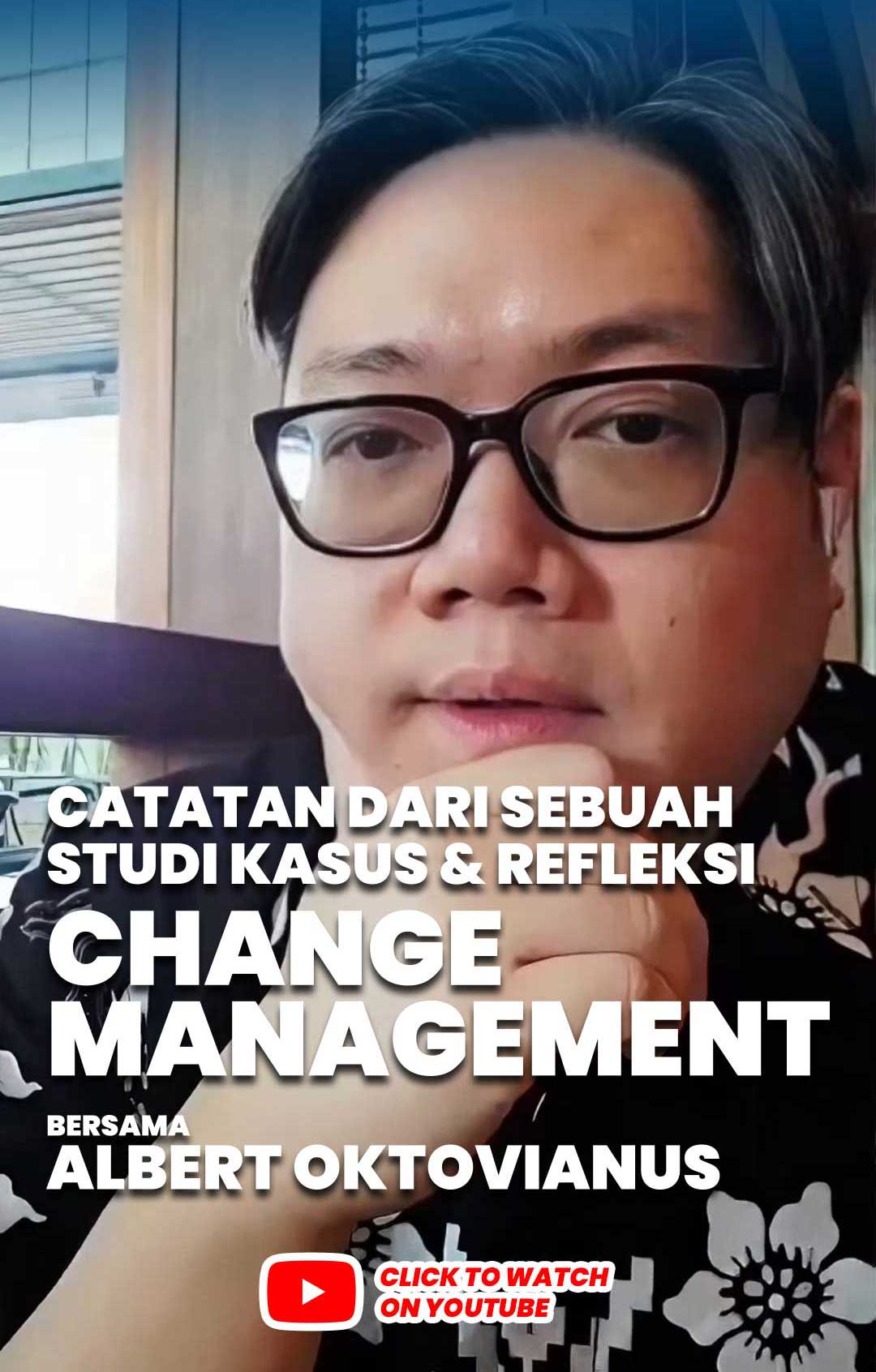
This reflection emerged when Cavlent shared a Key Persons Mapping case study with Albert, a human-centric strategy advisor and thought leader who frequently supports organizations through transition and growth phases.
View the case study here: CASE STUDY
Before discussing the mapping results, Albert chose to take a step back—to revisit the mindset that must come before data is applied
In Cavlent’s case study, the data revealed patterns commonly found in rapidly growing organizations: leaders still deeply involved in operations, trust within teams not yet solid, and several roles not fully aligned with expectations.
Technically, these appear to be clear signals to “start fixing things immediately”.
However, in his video reflection, Albert emphasizes a crucial point: data is not the finish line—it is the starting point of a conversation.
When organizations treat data as a final answer, change often stops at discussion level. Not because the data is useless, but because the organization is not ready to act on it.
In this section, Albert underscores that data only works when an organization is ready to change—not merely eager to change.
One of Albert’s most consistent emphases is this: change management is always about people.
More specifically, it is often about expectations that:
As a result, when data reveals potential mismatches or behavioral challenges, attention quickly shifts to specific individuals.
Yet the root issue often lies in unclear expectations from the beginning.
Albert invites listeners to ask:
Has the organization truly agreed on what is expected from this change?
Without that agreement, data will only highlight differences—it will not unify direction.
Albert also addresses the gap between ambition and readiness.
He highlights a pattern frequently seen in owners or leaders: wanting things to be structured quickly, wanting scalability, wanting systems to run independently without heavy involvement.
Yet at the same time:
In such conditions, overly aggressive change can actually increase friction. Not because the team lacks capability, but because the direction itself has not been fully agreed upon.
This section resonates strongly with anyone in the “we need to fix this fast” phase—without first pausing to align the map.
Before moving to solutions, several foundations must be clarified:
Without this foundation, any solution risks becoming mere activity—busy, but directionless.
This is where data like Cavlent works most effectively:
not to judge, but to open conversations that have not yet happened.
From the beginning, Cavlent has not positioned itself as a decision-maker or a provider of instant answers.
The data it produces serves as an initial navigation tool—helping organizations identify patterns, potentials, and risks that often go unnoticed in daily operations.
Data helps us see.
Questions help us understand.
Decisions remain in the hands of the organization.
Change management is not about who moves the fastest.
It is about who most clearly understands where they are heading—and can align themselves with that direction.
Good data does not force organizations to change.
It simply helps them avoid taking the wrong step.
And as Albert reminds us in his brief reflection:
without clarity of expectations and system readiness, change easily turns into structured noise—busy, but not moving the organization anywhere.
Albert Oktovianus is a human-centric strategy advisor and thought leader focused on leading and managing change for organizational effectiveness, aligning business strategy with HR strategy. Based in Jakarta, Albert frequently supports organizations in transition phases, emphasizing readiness, expectation alignment, and contextual clarity before executing change.
LinkedIn profile: https://www.linkedin.com/in/albert-okto
For decision-makers prioritizing speed and precision, Cavlent is a transformation navigator offering behavior-based team mapping. We identify soft skill mismatches and hidden risks in team dynamics through same-day insights, compared to traditional methods that are time-consuming and rely on manual processes.
For more information, contact: